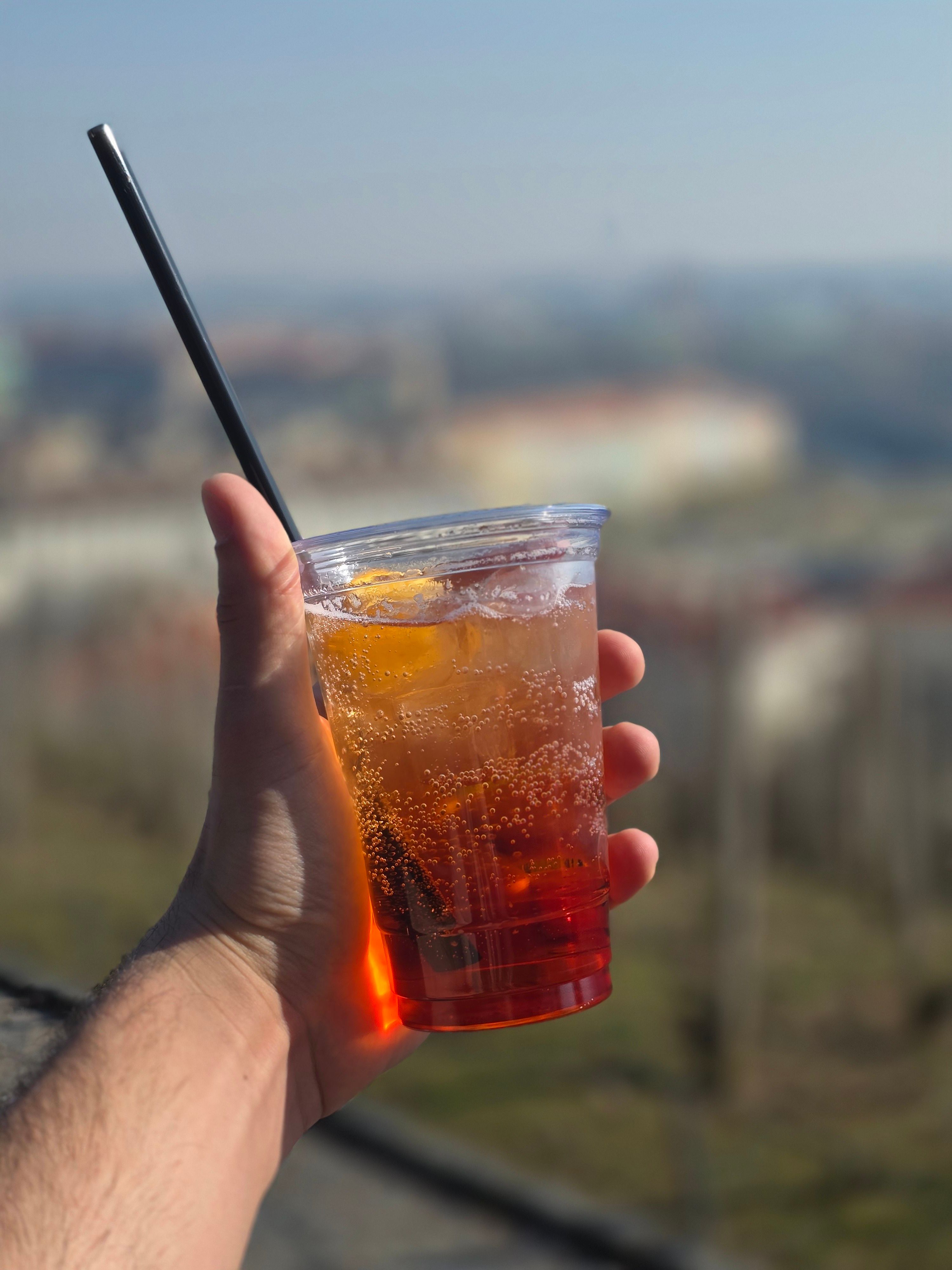
Every cocktail person knows the Negroni. Fewer know the drink it came from — a lighter, longer, more contemplative thing that was already old when Count Camillo Negroni asked his bartender to swap the soda for gin sometime around 1919. That original drink is the Americano, and it might be the most important aperitivo cocktail you've never ordered.
The origin: Milano-Torino and the American tourists
The Americano started life in the 1860s as the "Milano-Torino" — named simply for its two ingredients. Campari, from Milan. Sweet vermouth, from Turin. Equal parts, served over ice in a rocks glass, maybe with a splash of soda. It was the aperitivo of the Milanese bourgeoisie, sipped at Caffè Camparino in the Galleria Vittorio Emanuele II.
The name changed to "Americano" sometime in the early 1900s, though exactly why is debated. The most widely accepted story: American tourists visiting Italy in the late 19th and early 20th centuries took a particular liking to the drink, and Italian bartenders began calling it the Americano in their honour. Another theory ties the name to the Italian word amaricato — "made bitter" — which over time was softened to "americano."
Either way, by the 1920s the Americano was firmly established. It even appears in the James Bond novels — Bond orders one in From Russia with Love (1957), before the Vesper Martini became his signature. Ian Fleming knew what he was doing: the Americano is the drink of someone who pays attention.
The recipe
The Classic Americano
- 30ml Campari
- 30ml sweet vermouth (Cocchi di Torino or Punt e Mes preferred)
- Top with chilled soda water
- Large ice cubes — fill the glass
- Orange slice or twist
Build directly in a highball or tall rocks glass. Fill with ice. Pour the Campari and vermouth, then top with soda water — how much soda is a matter of personal preference, but a good starting point is roughly equal to the combined spirit volume (about 60ml). Stir gently. Garnish with a half-moon orange slice.
Why it works: the power of equal parts
The Americano is a 1:1 cocktail at its core — equal parts Campari and sweet vermouth, lengthened with soda. This simplicity is deceptive. Campari brings an aggressive, unapologetic bitterness (25% ABV). Sweet vermouth brings depth, warmth, and a complex botanical sweetness (typically 16–18% ABV). The soda water opens everything up, adds effervescence, and drops the final ABV to a gentle ~8%.
The result is a drink that's bitter enough to stimulate the appetite, sweet enough to be welcoming, and light enough to drink for an hour without losing your conversational edge. This is the aperitivo philosophy in liquid form.
Choosing your vermouth
The vermouth matters enormously here — arguably more than in a Negroni, because there's no gin to hide behind. In a Negroni, the juniper and botanicals of the gin add a third layer of complexity. In an Americano, it's just Campari and vermouth having a conversation, and the vermouth's character defines the tone.
Cocchi Vermouth di Torino — The gold standard. Rich, chocolatey, with a pronounced vanilla note and balanced bitterness. Makes a rounded, luxurious Americano.
Punt e Mes — More bitter, more assertive. The name means "point and a half" — supposedly one point of sweetness and half a point of bitterness. Paired with Campari, it makes a drier, more intense Americano for those who like their aperitivo with teeth.
Carpano Antica Formula — The most complex option. Heavy vanilla, dried fruit, and a long, slightly smoky finish. Makes an Americano that borders on dessert-like richness. Best for a cold evening or as an after-work wind-down.
Cinzano 1757 Rosso — A more accessible, slightly lighter choice. Less opulent than Carpano, but clean and well-balanced. A reliable everyday option that won't overpower the Campari.
The Americano vs the Negroni: siblings, not rivals
The easiest way to understand the Americano is to see it as the Negroni's older, quieter sibling. Same DNA — Campari and sweet vermouth — but where the Negroni adds gin (and with it, juniper, citrus peel, and an extra 15+ percentage points of alcohol), the Americano adds soda water.
The practical difference is significant. A Negroni is roughly 27% ABV — a sipping cocktail that demands respect. An Americano is ~8% ABV — barely stronger than a glass of wine, and far more refreshing. You can drink two Americanos in the time it takes to properly nurse one Negroni, and you'll still be sharp enough to read the menu.
Neither is better. They serve different moments. The Americano is for 5pm on a terrace when the evening is long. The Negroni is for 8pm at the bar when you've already decided what you're having for dinner.
Three variations worth trying
1. The Milano-Torino (no soda)
Go back to the original. Equal parts Campari and sweet vermouth, served over a single large ice cube in a rocks glass. No soda. This is the concentrated, spirit-forward version — darker, richer, and more intense. It's closer to a Negroni in weight, but without the gin's botanical distraction. A purist's drink.
2. The Americano Perfecto
Split the vermouth: half sweet (rosso) and half dry (bianco or extra-dry). This creates a lighter, more herbaceous version with less sweetness. The dry vermouth's green, almost savoury notes cut through Campari's sugar and create something more complex and food-friendly. Excellent with salumi or aged cheese.
3. The Americano Sbagliato
Replace the soda water with Prosecco. Yes — this puts it in Negroni Sbagliato territory, but without the gin. Equal parts Campari and sweet vermouth, topped with Prosecco instead of soda. More festive, slightly higher ABV (~11%), and with a wine-like elegance the soda version doesn't have. This is the version you make when guests arrive unexpectedly and you want to impress without effort.
Where to drink it
The Americano is having a quiet renaissance. As the low-ABV movement gains momentum and bartenders rediscover pre-Prohibition classics, it's appearing on menus that would have listed only Negronis and Spritzes a few years ago.
Caffè Camparino, Milan — Where the story began. Gaspare Campari's original bar, opened in 1867, still operating in the Galleria Vittorio Emanuele II. Order the Americano here and you're drinking in the exact place where the Milano-Torino was first served. The experience alone is worth the trip.
Bar Basso, Milan — Famous for inventing the Negroni Sbagliato, but their Americano is quietly exceptional. The bartenders here understand the heritage and treat it with the respect it deserves.
Caffè Torino, Turin — Under the porticos of Piazza San Carlo since 1903. The vermouth here is taken seriously — after all, this is its birthplace. The Americano arrives with the kind of unhurried elegance that makes you wonder why you ever ordered anything else.
The case for the Americano comeback
In an era obsessed with "mindful drinking" and low-ABV cocktails, the Americano should be everywhere. It was low-ABV before low-ABV was a marketing term. It's three ingredients. It takes 30 seconds to make. It costs less than a Negroni (no gin required). And it tastes like the accumulated wisdom of 160 years of Italian bar culture.
The next time you sit down for aperitivo and reach instinctively for the Spritz or the Negroni, pause. Order an Americano. It's the drink that started everything, and it's been patiently waiting for you to notice.