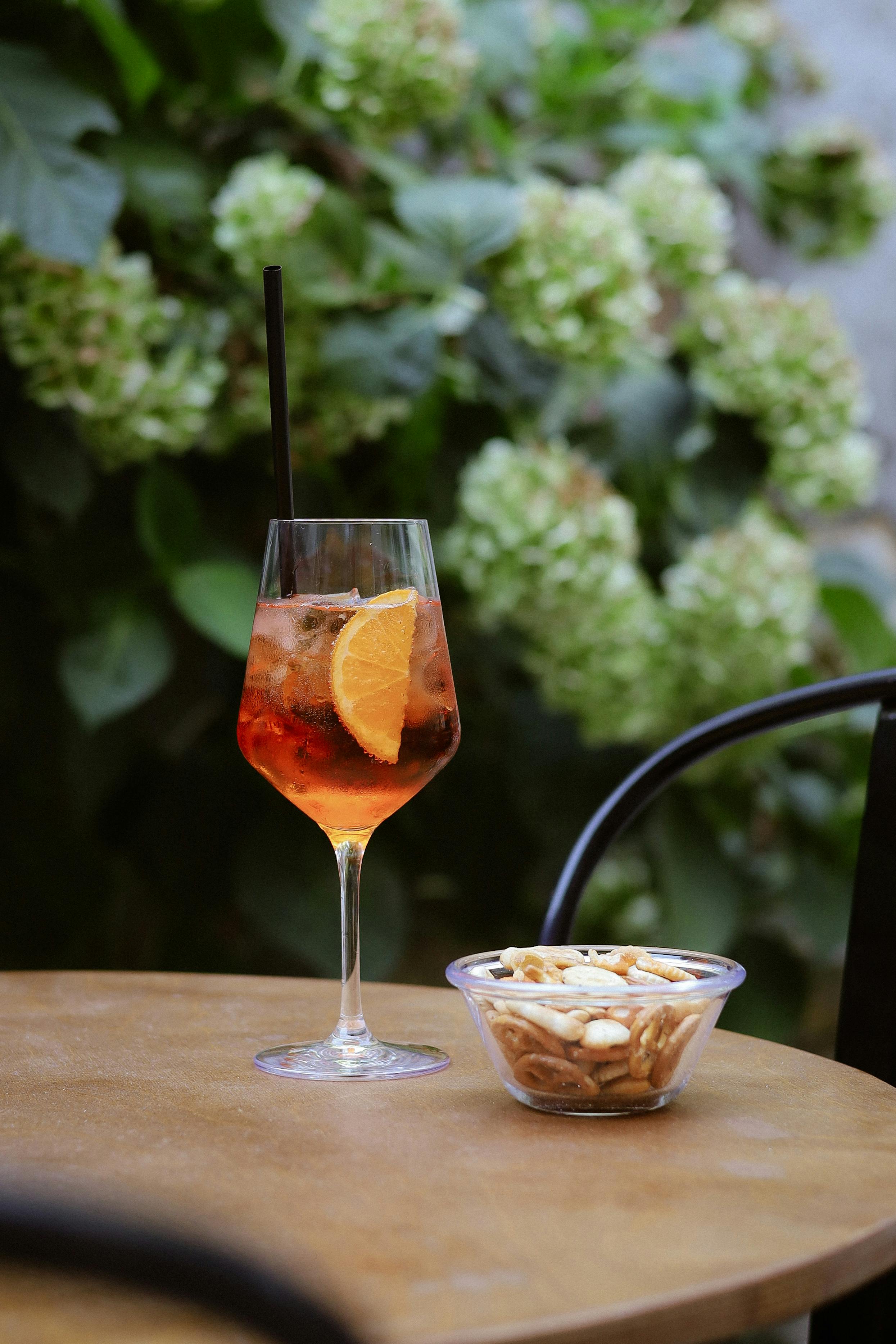
If you've ever ordered a Spritz in Venice and felt it tasted different from the one you made at home — it's not your imagination. The ingredients are the same, but the ratio, the ice, and the pour order all matter more than most people realise.
The Aperol Spritz is arguably the most successful aperitivo export Italy has ever produced. In the span of two decades, it went from a regional Venetian ritual to the dominant warm-weather drink in 60+ countries. But with popularity comes a wave of badly made versions. This guide fixes that.
The 3-2-1 rule
The official recipe, endorsed by Aperol and deeply embedded in Venetian bar culture, is deceptively simple:
Classic Aperol Spritz
- 3 parts Prosecco DOC (chilled, ideally Valdobbiadene)
- 2 parts Aperol
- 1 part soda water (a small splash)
- Plenty of ice — always large cubes or a single large sphere
- One large orange slice, placed on the rim not submerged
Build the drink directly in a large wine glass (a stemmed balloon glass is ideal). Add ice first. Pour Prosecco, then Aperol, then the small soda splash. Do not stir — a gentle swirl is all you need. The layers naturally combine.
Why the ratio matters
The 3-2-1 formula is not arbitrary. Aperol sits at 11% ABV and has a pronounced bittersweet character. Too much of it (say, a 1:1 with Prosecco) becomes cloying and overwhelmingly orange. Too little and the Prosecco dominates and you lose the bitter complexity that makes an Aperol Spritz different from a glass of sparkling wine with a splash of orange juice.
The soda water's job is purely textural — it lengthens the drink and adds a subtle additional fizz that changes the mouthfeel. It does almost nothing to the flavour at the standard 1-part measure, but skip it entirely and the drink feels heavier and shorter.
"The Spritz is a philosophy, not a recipe. You drink it slowly. You don't hurry the aperitivo hour."
Venetian variation 1: The drier Spritz
Bartenders at the best bacari (Venetian wine bars) often nudge the ratio toward more Prosecco. A 4-2-1 ratio creates a drier, lighter drink that's more wine-forward. This is the preferred style in the early evening when you want something refreshing rather than bold, and it pairs beautifully with salty snacks like olive ascolane or tramezzini.
Venetian variation 2: Half Aperol, half Select
This is the insider move. Replace half the Aperol with Select (the original Venetian bitter, predating Aperol by decades). The result is a more complex, slightly more herbaceous drink with a longer, drier finish. Select has a more pronounced bitterness and a lower sweetness than Aperol, so the combined drink sits exactly between the classic Aperol Spritz and the more adult Select Spritz.
The one thing most people get wrong
Ice. Most home Spritz failures come from using small, fast-melting ice cubes that dilute the drink within minutes. Use large cubes (at least 4cm) or a single large sphere. In Venice, bartenders often use a single large cube or a handful of cracked ice rather than the standard cubed tray. The goal is maximum chill, minimum dilution.
Choosing the right Prosecco
Not all Prosecco is equal. For an Aperol Spritz, you want a Prosecco DOC Treviso or Valdobbiadene with noticeable acidity. Avoid anything labelled "extra dry" (paradoxically sweeter than "brut") — the additional sweetness combined with Aperol's sugar content tips the drink from refreshing into tooth-achingly sweet. A Brut or Extra Brut Prosecco will give you the cleaner, more balanced result.
The best widely-available options: Santa Margherita Prosecco Superiore, Bisol Crede, or La Marca Prosecco DOC. For daily use, a good supermarket Prosecco Brut at €8–12 is perfectly fine.