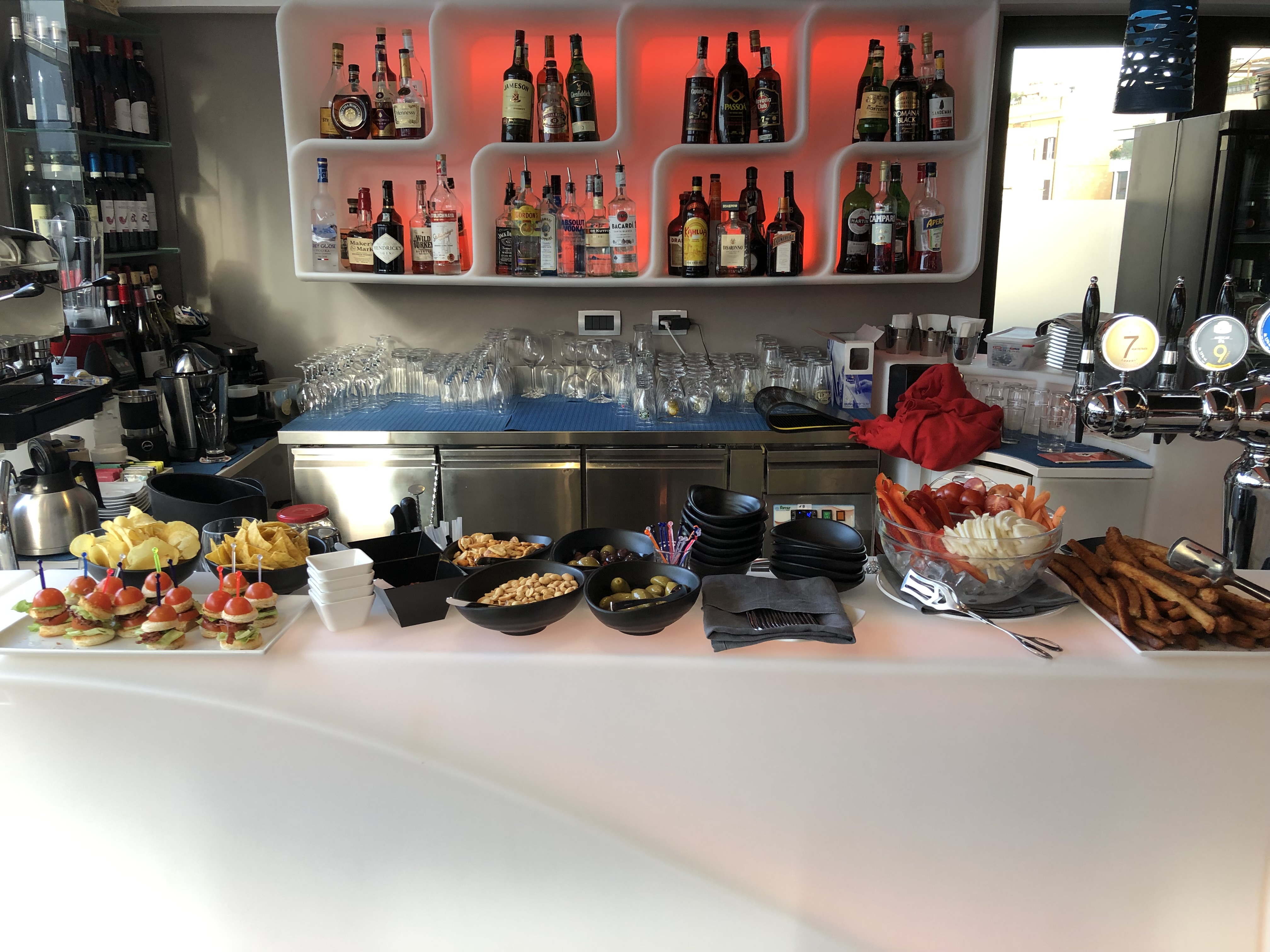
At six in the evening in any Italian bar, there's a table with four adults and one nine-year-old, and all five of them have the same drink in front of them. Orange, over ice, in a proper stemmed glass, with a slice of orange on the rim and a small dish of olives alongside. The adults are drinking Spritzes. The child is drinking Crodino. Nobody at that table thinks the child has been given a consolation prize.
That's the whole thesis, and Italy landed on it in 1964. The rest of the world spent the following six decades treating the non-drinker as a problem to be solved — sparkling water with a sad lime, a Coke, "we can do you a mocktail" — before arriving, in the last few years, at roughly the same conclusion Italian bars reached before the moon landing. What you serve the person who isn't drinking should look and feel exactly like what everyone else is having.
A drink named after a town it no longer comes from
Crodino takes its name from Crodo, a small town in the Val d'Ossola, up in the Alpine north-west corner of Piedmont near the Swiss border. It's been produced since 1964, and for most of its life it was made and bottled in that town. The brand joined Campari Group in 1995, when Campari picked up the Italian arm of the Dutch group BolsWessanen — the same deal that brought Cynar into the fold, which is a nice piece of trivia for anyone who assumes the artichoke amaro and the kids' aperitivo have nothing in common.
In 2023, production moved out of Crodo. The name stayed. There's something very Italian about that — a drink still carrying the name of a mountain town it left, the way half the country's food names are postcards from places the recipe has long since outgrown.
What's actually in it
The recipe is secret, which is standard for this corner of the drinks world, but the broad method is known and it's more serious than the bottle's size suggests. Herbs, plants and fruit are infused and distilled — a blend that includes spices like cardamom, cloves and nutmeg, worked together with orange oil and bitter orange peel into a concentrated essence.
Then the part that surprises people: that essence is aged in oak barrels for six months before spring water, sugar and carbonation are added to make the drink you actually pour. Six months in wood, for a soft drink. That's the difference between Crodino and the modern supermarket "alcohol-free aperitif" that was blended on a Tuesday and shipped on the Thursday — and you can taste it. Crodino has an actual bitter backbone and a faint dried-spice depth underneath the sweetness, rather than just orange syrup pretending to be complicated.
It's sweeter than an Aperol Spritz and considerably less bitter than anything in the amaro family. But the bitterness is real, and it's what keeps the drink working as an aperitivo — it still opens the appetite, which is the entire job description.
The bottle is part of the design
Crodino comes in a small, stubby, brown glass bottle — 10cl, roughly a third of a can of soft drink. It looks like something medicinal, and it is deliberately, usefully small.
That size is the product's cleverest decision. A 10cl bottle poured over a glass of ice fills a stemmed aperitivo glass to exactly the level a Spritz would reach. You get one drink, in the right glass, that ends when everyone else's ends. Serve someone a 33cl can of anything and they're holding a soft drink; serve them a 10cl bottle over ice with an orange slice and they're holding an aperitivo. The whole trick is proportion.
How to serve it properly
Getting this right takes about fifteen seconds and matters more than it should.
Use a real glass. A stemmed wine glass or a tumbler — whatever the drinkers at the table are using. Never the bottle with a straw in it.
Plenty of ice. Crodino is served cold and over ice, always. It's too sweet at room temperature and the ice opens it up as it melts.
Orange slice, and mean it. A half-moon of orange in the glass, not perched decoratively on the rim. The oils from the peel do real work against the sweetness.
Olives on the side. Salt is what stops a sweet drink cloying. A small dish of good green olives, some crisps, a few salted almonds — the same stuzzichini everyone else at the table is eating.
For a longer, drier version, top it with soda water or a splash of tonic. The quinine in tonic pushes the bitterness up and the sweetness down, which makes it taste noticeably more grown-up. This is what to do if you're drinking three of them across an evening.
The rest of the analcolico shelf
Crodino isn't alone. Italy has a whole category — the analcolico — that most countries never developed.
- San Bitter — Campari's own, in a little red bottle. Sharper and more bitter than Crodino, less sweet, and the closer match if you actually want something that tastes like a Campari drink.
- Sanbittèr Emozioni Rosa — the pink, softer, more floral version of the above.
- Crodino Twist range — newer flavoured extensions of the original, aimed at people who want it fruitier.
- Alcohol-free Aperol and Campari alternatives — the recent wave, riding the global no-alcohol boom. Some are decent. None of them have sixty years of muscle memory behind them in Italian bars.
Why it works when mocktails don't
The modern alcohol-free movement mostly tries to solve the problem chemically — replicate the botanical complexity, mimic the burn, engineer something that fools the palate into thinking there's gin in it. Sometimes that works. Often it produces an expensive drink whose main quality is being an imitation of another drink.
Crodino never tried any of that. It isn't pretending to be a Spritz. It's a bitter orange soft drink that happens to be built, served and priced like an aperitivo, and its success rests almost entirely on the social side of the problem rather than the chemical one. Nobody is fooled. Nobody needs to be. The point was never to simulate alcohol — it was to make sure that everyone at the table is holding the same shape of evening.
The nine-year-old
Come back to that table. The child with the Crodino isn't being managed or distracted or handed a lesser thing while the adults get the real drinks. They're being taught the ritual: this is what six o'clock looks like, this is the glass it comes in, this is how slowly you drink it, this is what you eat alongside. By the time they're old enough for a Spritz, the only thing that changes is the liquid.
That's a longer game than any drinks company usually plays, and Italy has been playing it since 1964 — which may be why the country never needed a mindful-drinking movement. It already had the bottle, the ice, the orange slice, and a seat at the table for whoever wasn't drinking.