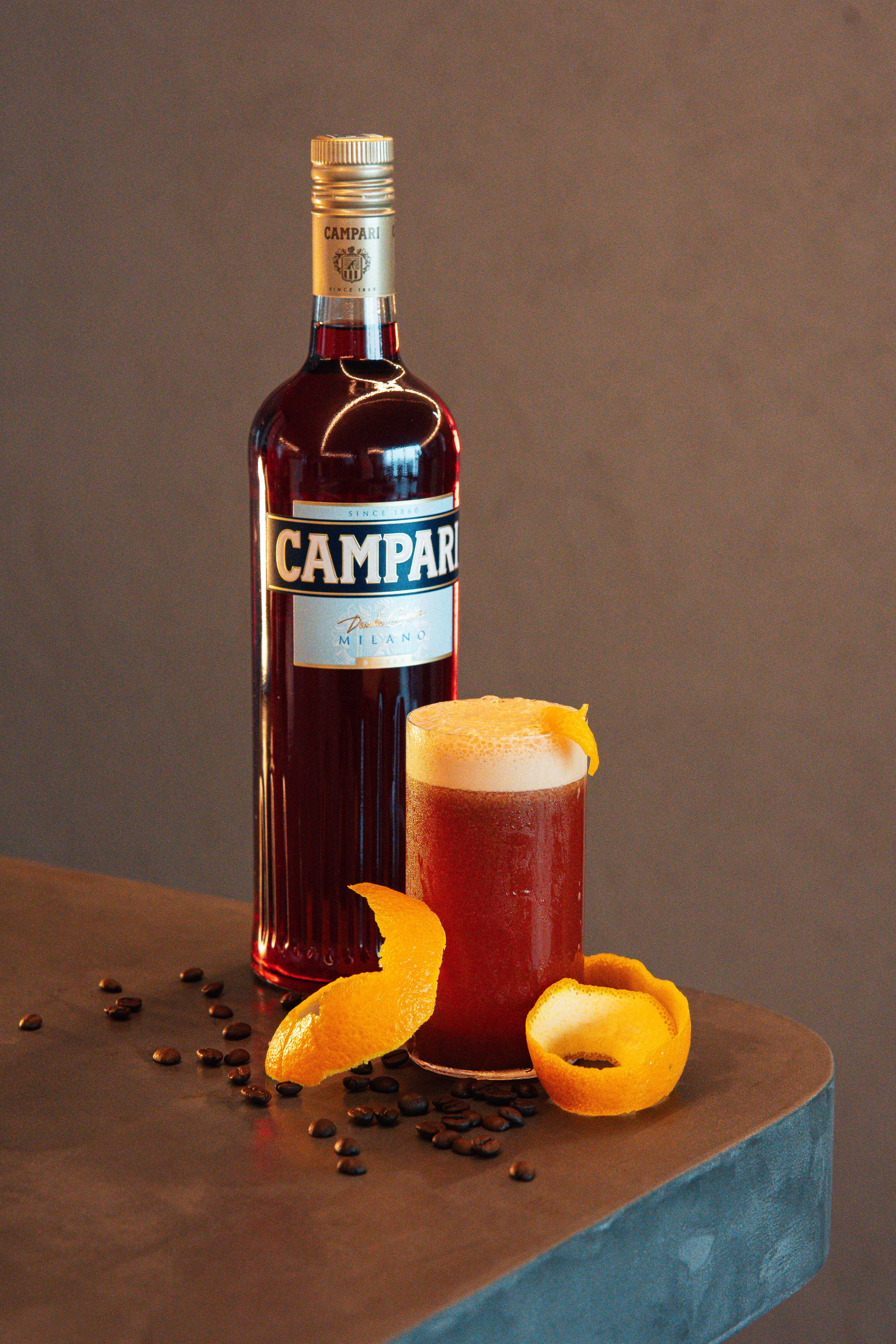
Two ingredients. That's it. Campari and orange juice. The Garibaldi is the kind of cocktail that makes you wonder how something so simple can be so good — and the answer is entirely in how you treat the orange juice. Get that right, and this becomes one of the most beautiful, refreshing, and criminally underrated drinks in the Italian aperitivo canon.
The name: unification in a glass
The Garibaldi is named after Giuseppe Garibaldi, the general who unified Italy in the 1860s. The cocktail is a symbolic reference to that unification: Campari represents the industrial, cosmopolitan North (Milan), while the orange juice represents the agricultural, sun-drenched South (Sicily). North meets South. Bitter meets sweet. Two halves of Italy in a single glass.
It's a charming origin story, and whether or not any 19th-century bartender actually had it in mind, the metaphor is so perfect that it deserves to be true.
The recipe
The Garibaldi
- 45ml Campari
- 120ml fresh orange juice — "fluffy" (see method below)
- Ice
- Orange half-moon or wedge for garnish
Fill a highball glass with ice. Pour the Campari. Top with fluffy orange juice. Give it one gentle stir to integrate. Garnish with an orange half-moon on the rim.
That's the recipe. The magic is in the next section.
The technique: how to make fluffy orange juice
This is what separates a forgettable Campari-and-OJ from a proper Garibaldi. "Fluffy" orange juice has a thick, foamy, almost milkshake-like texture that transforms the drink's mouthfeel completely. The foam traps air, which softens Campari's aggressive bitterness and creates a creamy, velvety drinking experience.
There are three ways to achieve it:
Method 1: The blender (best results)
Juice your oranges fresh, then blend the juice on high speed for 15–20 seconds. The blender incorporates air rapidly, creating a thick, pillowy foam that sits beautifully on top of the drink. This is the method used by Dante NYC, the bar that put the modern Garibaldi on the global cocktail map. Strain out any large pulp bits if you prefer a cleaner texture, but keep the foam.
Method 2: The milk frother
A handheld electric milk frother (the kind you'd use for matcha or cappuccino foam) works surprisingly well. Submerge it in a glass of fresh OJ and froth for 20–30 seconds. You won't get quite as much volume as a blender, but the texture is excellent and the cleanup is trivial. This is the best home method for a single serving.
Method 3: Hard shake with ice
If you have neither blender nor frother, pour the orange juice into a cocktail shaker with a handful of ice and shake hard for 15 seconds. The agitation aerates the juice and the ice chills it simultaneously. Strain into the glass over fresh ice. The foam layer will be thinner, but the drink still works.
"The Garibaldi is proof that technique can matter more than ingredients."
Why the orange juice must be fresh
This is non-negotiable. Carton orange juice — even the "not from concentrate" kind — will not froth properly. It lacks the natural pectin and pulp structure that allows fresh-squeezed juice to trap air and hold foam. The result with carton juice is a flat, overly sweet, one-dimensional drink that tastes like a bad brunch mistake.
Fresh-squeezed juice from whole oranges has natural oils from the peel (which get released during juicing), pectin from the pulp, and a brighter, more complex acidity. All of this contributes to the foam structure and to the flavour balance with Campari.
Best oranges for a Garibaldi: blood oranges (Tarocco or Moro) for a more complex, slightly berry-like flavour and a stunning deep red-orange colour. Navel oranges work well for a cleaner, sweeter version. Valencia oranges give the best juice yield. Any of these will be excellent — just make sure they're fresh and ripe.
The Campari ratio: finding your sweet spot
The classic ratio is roughly 1 part Campari to 3 parts orange juice (45ml to 120ml). This gives you a drink that's unmistakably Campari-driven but softened and made approachable by the orange juice.
If you're new to Campari, start with a 1:4 ratio (30ml Campari to 120ml OJ). The bitterness will be present but gentle, and the drink will taste more like a fancy, grown-up orange juice than a cocktail. This is also the best ratio for a brunch setting where you'll be drinking more than one.
If you're a Campari veteran, push it to 1:2 (60ml Campari to 120ml OJ). This is spirit-forward and boldly bitter — closer to a stirred cocktail in intensity, despite the long format. Not for the faint-hearted, but rewarding for anyone who genuinely loves Campari's medicinal edge.
The Dante effect
The Garibaldi existed for decades as a forgotten Italian classic — the kind of drink your nonno might order but no cocktail bar would dare put on a menu. That changed in the 2010s when Dante, a Greenwich Village bar in New York, made it their signature serve.
Naren Young, Dante's bar director, championed the Garibaldi with fanatical attention to the fluffy orange juice technique. He made it the bar's most Instagrammed drink — that bright orange foam rising above the glass became iconic. Dante was named the World's Best Bar in 2019, and the Garibaldi was a significant part of that story.
The irony is beautiful: an Italian drink, forgotten in Italy, was resurrected by an Australian bartender working in an Italian-American café in New York. Aperitivo culture has always been a conversation across borders.
Two variations
1. The Garibaldi Sbagliato
Add a 30ml float of Prosecco on top of the finished drink. The bubbles interact with the fluffy foam to create a cascading, almost Guinness-like visual effect. It adds a wine-like acidity and lifts the whole drink into something more festive. Excellent for a weekend aperitivo when you want to make two ingredients feel like a celebration.
2. Blood Orange Garibaldi
Use only Sicilian blood oranges (Tarocco or Moro). The resulting drink is a deep, dramatic crimson — almost matching the Campari itself. The flavour shifts too: blood oranges bring a tart, raspberry-like edge that pairs with Campari's bitterness in a way that regular oranges can't replicate. If blood oranges are in season (December through April in Italy), this is the definitive version.
When to serve it
The Garibaldi is the ultimate brunch cocktail — more interesting than a Mimosa, less aggressive than a Bloody Mary, and with an ABV low enough that you can have two without cancelling your afternoon plans. It's also a brilliant aperitivo for anyone who finds a straight Negroni or Americano too intense.
Pair it with: cornetti (Italian croissants), a frittata, focaccia with mortadella, or anything egg-based. The orange juice makes it feel like morning; the Campari makes it feel like permission to slow down.
Two ingredients. One technique. A whole philosophy. That's the Garibaldi.