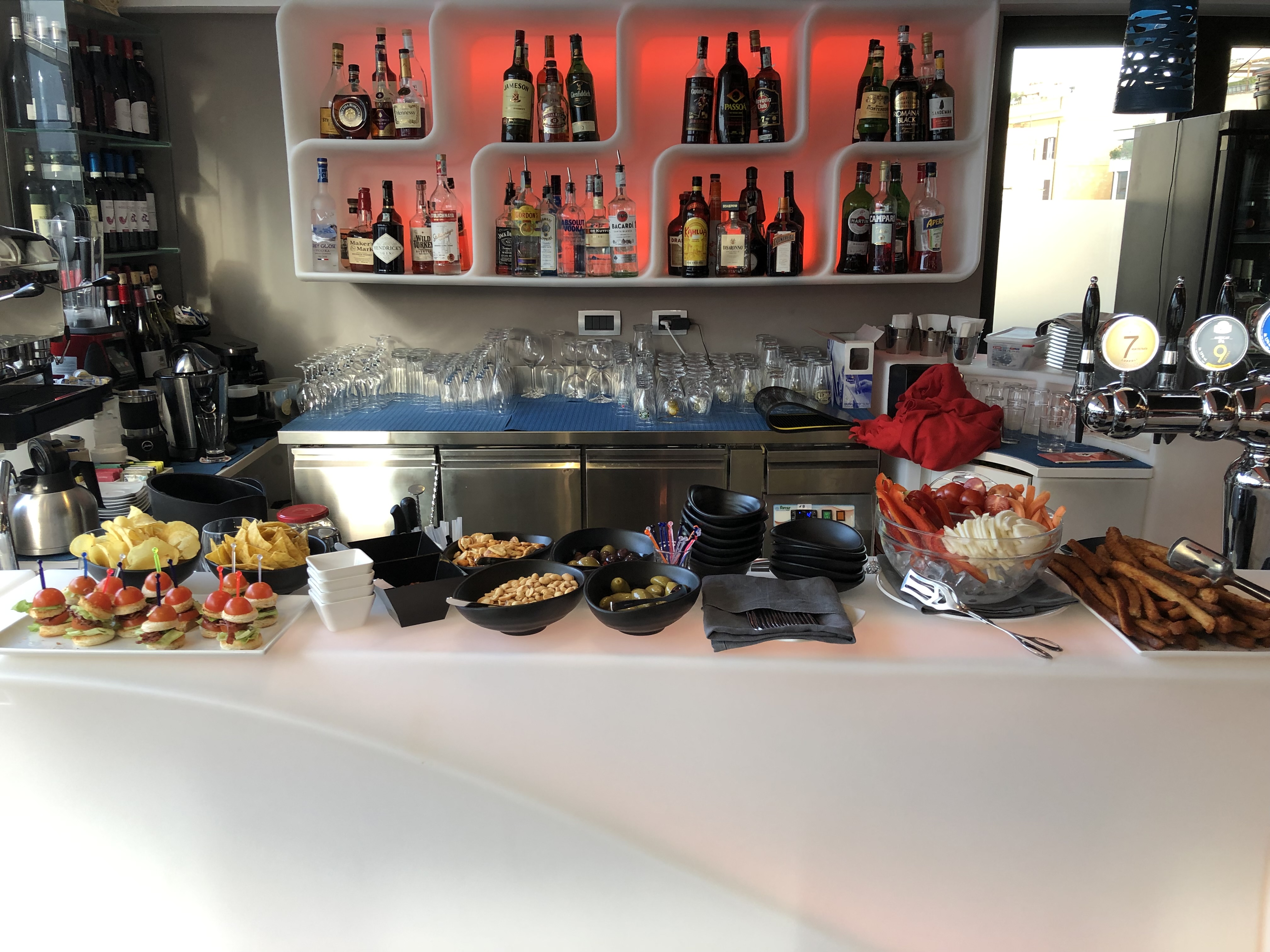
There's a plastic pumpkin on the counter of the bar on my corner, and the barista clearly didn't choose it. It arrived with the delivery, it's been there since the 20th, and it will go in the bin on the morning of the 2nd. On the 31st a handful of kids in supermarket costumes will come through shouting dolcetto o scherzetto, be handed a sweet from a bowl kept for the purpose, and leave. That is Halloween in Rome: a borrowed evening, done politely, over by ten.
Then the next morning the whole city empties. The 1st of November is a public holiday, the roads out to the cemeteries are jammed by nine, and every florist in the country has sold out of chrysanthemums. Italy doesn't do Halloween, not really. It does the two days after it — and it has been doing them, with its own foods and its own drink, for a lot longer than anyone has been carving pumpkins.
The borrowed night
Halloween reached Italy in the 1990s, through films and television and the sort of children's parties that come with imported cartoons, and it has grown every year since. There are costume nights in the clubs, pumpkins in the supermarkets, and a generation of Italian children for whom "dolcetto o scherzetto" is as natural as it is to kids in Ohio. The older generation grumbles about it in exactly the way the older generation grumbles about everything imported, which is to say with real feeling and no effect whatsoever.
But it sits on top of something much older, and the older thing still wins. The Catholic calendar put All Saints — Ognissanti, Tutti i Santi — on the 1st of November and All Souls, the day of the dead, on the 2nd. Italy kept both, made the first a national holiday, and built around the pair a quiet two-day observance that no amount of plastic pumpkin has dislodged.
I Morti
The 2nd of November is the Commemorazione dei Defunti, but nobody calls it that. It's I Morti — the dead — and it's the day you go to the cemetery. Families drive out together, clean the graves, replace the flowers, light the small red lamps, and stand around talking to each other and, in some cases, to the headstone. Then they go home and eat. It isn't morbid. It's closer to a family reunion where a few of the family happen to be underground.
The flower is the chrysanthemum, and this is worth knowing if you ever buy flowers in Italy: the chrysanthemum is the flower of the dead, full stop. You put them on graves. You do not bring them to a dinner party, you do not give them to a woman you're courting, and you do not send them to a hospital. A bunch of chrysanthemums handed to a living Italian is, at best, a joke they'll decide to forgive.
What the dead eat
Every region has its sweets for these two days, and nearly all of them are named after the dead, bones, or beans. The naming is blunt and nobody softens it.
Fave dei morti — "the dead's beans" — are the central Italian version: Umbria, the Marche, Lazio. Small, dense almond biscuits shaped like a fava bean. Why a bean? The explanations are argued over, but the oldest runs back past the Church to the Romans and the Pythagoreans, who held that fava beans had something of the souls of the dead in them — which is why Pythagoras famously wouldn't eat them. Two thousand years later, Umbrian grandmothers bake the bean and eat it on the dead's day, and the thread is unbroken whether or not anyone remembers where it started.
Ossa dei morti — "bones of the dead" — turn up in Sicily, Piedmont and Lombardy in different forms, but the idea is the same: a hard, pale, sugary biscuit, usually with cinnamon and cloves, that looks like a knuckle and snaps like one. The Sicilian version is rested two or three days before it's baked so that the sugar crust separates from the base, which is what gives it the bone-and-marrow look. They are meant to be a little unsettling. That's the point.
Pan dei morti is the Milanese one — a dark, spiced, flattened loaf packed with dried fruit and crushed biscuit, dusted with icing sugar. Lombardy's dead eat better than most.
Sicily: the dead bring the presents
Sicily goes furthest, and it's the version worth knowing about because it's the real Italian trick-or-treat — older, stranger and better than the imported one.
On the night between the 1st and the 2nd, the dead come back. Not to haunt anyone — to bring gifts. Sicilian children go to bed knowing that their dead relatives, the grandmother or great-uncle they may never have met, will visit in the night and leave them something, and in the morning they hunt the house for it. What they find is u cannistru, the basket: ossa dei morti, dried fruit, roast chestnuts, chocolate, a toy or two, and the thing that makes it Sicilian — frutta martorana, marzipan shaped and hand-painted into peaches, figs, prickly pears and oranges so convincing you check twice. It originated in Palermo and it is everywhere on the island that week. There are sugar dolls too, the pupi di zucchero, painted figures of knights and ladies made of hardened sugar.
Set it beside the American version and the difference says everything. In Ohio a stranger gives your child sweets at a doorstep on condition of a threat. In Palermo your dead grandmother gives your child marzipan in the night out of love. One of these is a holiday; the other is a family keeping its dead at the table. Italian children, incidentally, have no trouble holding both ideas at once — they do the costumes on the 31st and wait for the basket on the 2nd, and they're not confused about which one matters.
The drink of the week is the first wine of the year
Here's the part nobody tells visitors. The last week of October isn't just the dead's week in Italy — it's the week the year's first wine goes on sale.
Vino novello is Italy's new wine: made fast from the autumn's grapes by carbonic maceration, bottled within weeks, purple, grapey, soft, barely tannic, and meant to be drunk within months rather than cellared. The French have Beaujolais Nouveau, released on the third Thursday of November with a great deal of ceremony. Italy's novello used to come out on the 6th of November. Then, in 2012, the rules changed and the release date was moved to the 30th of October — three full weeks ahead of the French. Nobody in Italy pretends this was an accident.
So in the exact days the rest of the world is drinking something orange out of a pumpkin, Italian bars are opening the first bottles of the year. It's a cheap wine, deliberately — €5 to €8 — and it's drunk young, slightly cool, and with one thing above all others: roast chestnuts. The castagnata, the chestnut roast, is the other half of the ritual. A paper cone of hot chestnuts from a street cart and a glass of novello is as autumnal as Italy gets, and it's what you'll find on a bar counter from the 30th of October through to Saint Martin's day on the 11th of November, when the older tradition says the new wine is officially open — a San Martino ogni mosto è vino, on Saint Martin's every must is wine.
It's also the week the bottles of amaro come back out after the summer. The weather turns, the Spritz season ends, and the digestivo reclaims the end of the evening. The dead's week is the hinge of the Italian drinking year.
How to do the week like an Italian
Skip the pumpkin cocktail. There is no Italian pumpkin cocktail, and there's no need to invent one. The spread for the last days of October and the first of November is already set, and it's better than anything with cinnamon syrup in it.
- A bottle of novello, just released, served slightly cool — not room temperature, not fridge-cold. A cheap one is correct; an expensive one is missing the point.
- Roast chestnuts, hot, in a paper cone or straight off a tray. Score them, roast them, burn your fingers.
- Fave dei morti or ossa dei morti on a plate, and if you can find them, a few pieces of frutta martorana — the Sicilian marzipan fruit — for the table.
- Chrysanthemums only at the cemetery. Not on the table. See above.
- An amaro after, if you want the evening to end properly. It's the season for it now.
The 2nd of November
By the morning of the 2nd the plastic pumpkin is in the bin, the costumes are back in the drawer, and the whole of Italy is standing in a cemetery holding chrysanthemums. In Sicily the children have found the basket. In every bar from Turin to Palermo the first wine of the year has been open for three days, and there's a cone of chestnuts going cold next to the till. The borrowed night came and went. The old days stayed — the way they always have, with the dead invited and the new wine poured.