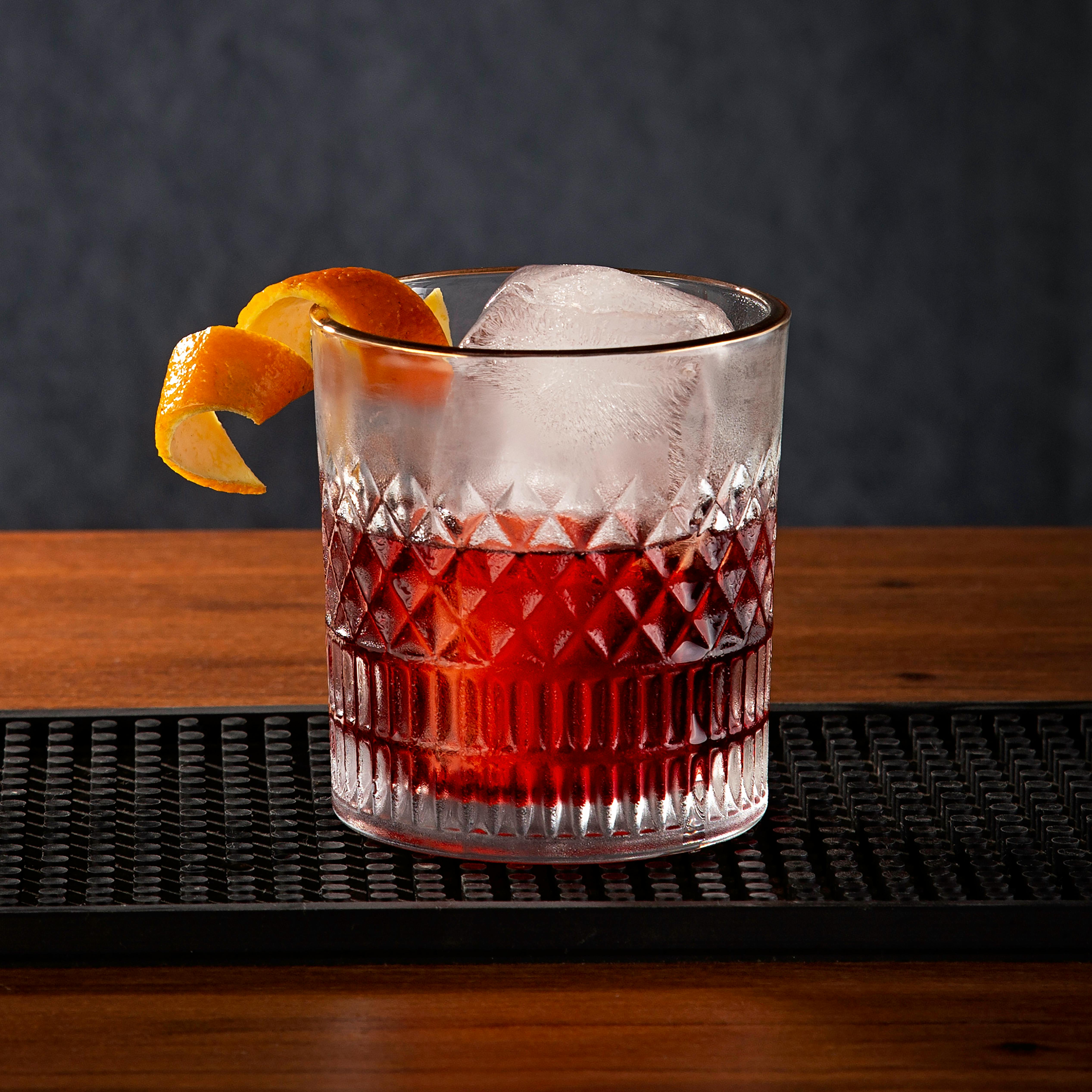
There are cocktails that are more famous. There are cocktails that are more complex. But there is no cocktail more perfectly balanced than the Negroni. Equal parts gin, Campari, and sweet vermouth — three ingredients that should, by any logical analysis, fight each other — instead produce something unified, harmonious, and irreducibly greater than the sum of its parts.
The Negroni is also the most versatile cocktail template in existence. You can replace the gin (Sbagliato). You can change the bitter (Cynar Negroni, Aperol Negroni). You can adjust the vermouth (Negroni Bianco with dry vermouth). Every variation opens a new door. But you have to understand the original before you can meaningfully open those doors.
The origin story
Florence, 1919. Count Camillo Negroni walks into Caffè Casoni on Via Tornabuoni — later renamed Caffè Giacosa — and asks his regular barman, Fosco Scarselli, to strengthen his usual Americano (Campari, sweet vermouth, soda) by replacing the soda water with gin. Scarselli complies. He garnishes it with an orange slice instead of the lemon traditionally used for an Americano — to distinguish one from the other. The drink spreads from Florence to the rest of Italy, then the world.
Whether this story is true is debated. Count Negroni certainly existed. The drink certainly emerged in Florence around this time. The detail about the orange slice is the kind of specificity that suggests a real memory rather than a constructed myth.
The recipe
The Negroni
- 30ml gin (London Dry recommended — Beefeater, Tanqueray, or Gordon's)
- 30ml Campari
- 30ml sweet vermouth (Punt e Mes or Cocchi di Torino for best results)
- One large ice cube or sphere
- Orange peel to garnish — expressed over the glass, run around the rim, and rested on the ice
Add all ingredients to a mixing glass with ice. Stir — do not shake — for approximately 30 seconds, until well-chilled and properly diluted. Strain over a single large ice cube in a rocks glass. Express the orange peel over the surface of the drink (hold it skin-side down, squeeze firmly to spray the orange oils over the liquid), run it around the rim, and rest it on the ice. Do not drop it in unless you want the peel oils to keep releasing into the drink as it sits.
Why stirred, not shaken
Shaking aerates a cocktail and adds water from ice fracture. This is desirable for sours, fizzes, and anything with citrus or egg. For stirred drinks — Negroni, Manhattan, Martini — aeration is the enemy. It clouds the drink, changes the texture, and dilutes unevenly. Stir for 30 seconds with large ice cubes, and you get perfect dilution, perfect temperature, and a jewel-clear drink with a silky texture. Shake it and you get something inferior that will make any Italian bartender quietly sigh.
Choosing your gin
The gin debate is real and worth engaging with. London Dry gins (Beefeater, Tanqueray) give you a clean, juniper-forward platform that lets Campari and vermouth express themselves without competition. Contemporary gins with heavy citrus or floral profiles can work beautifully — a gin heavy with bergamot plays off Campari's orange notes — but they change the character significantly. For your first Negroni at home, use Beefeater. It is one of the world's finest gins at any price point and it makes the most honest Negroni possible.
The Negroni Bianco
Replace Campari with Suze (a French gentian liqueur) and Martini Rosso with dry white vermouth. The result is a pale, floral, slightly less bitter variation that works beautifully in warm weather. Less Roman than the original but worth knowing.
Food pairing
The Negroni is more demanding than a Spritz when it comes to food pairing. Its higher ABV and intensity means it needs foods that can hold their own: aged Parmigiano-Reggiano (at least 24 months), dark 70%+ chocolate, anchovy toast, or a small plate of prosciutto crudo with melon. It does not go with delicate foods — it overwhelms them. Treat it like a serious conversation partner, not background music.