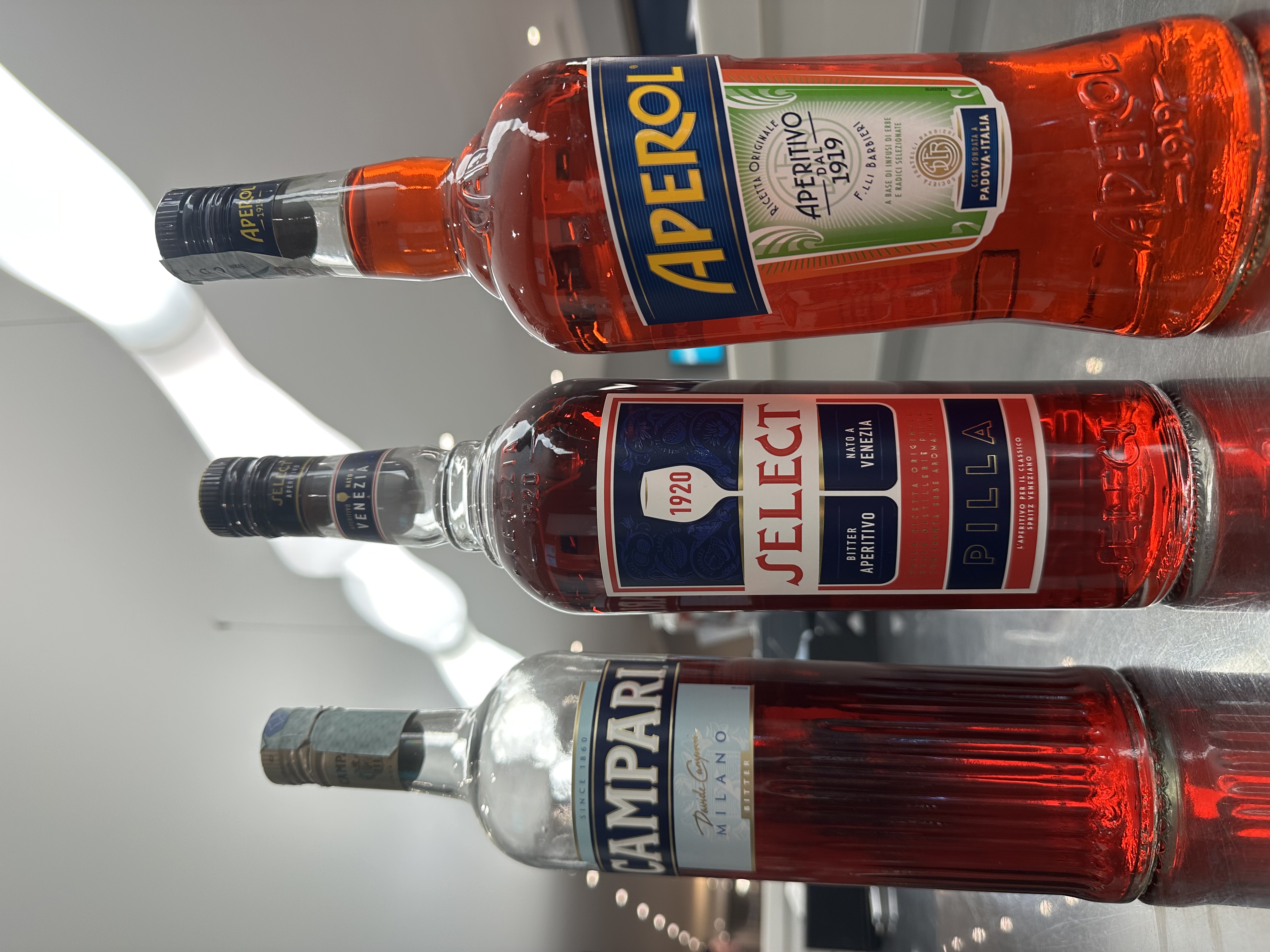
Before Aperol painted every Instagram feed orange, before Campari Spritzes became a Milanese power move — there was Select. A deep ruby-red bitter liqueur, born in Venice in 1920, that quietly defined what a Spritz was supposed to taste like for the better part of a century.
If you order a "Spritz" in Venice without specifying, there's a fair chance you'll get one made with Select. Not Aperol. Not Campari. The locals have a longer memory than the global cocktail industry gives them credit for.
A brief history: the original Venetian bitter
Select was created by the Pilla brothers in Venice in 1920. The name comes from the Latin selectus — "chosen." It was designed specifically as a Spritz bitter, decades before Aperol (1919 in Padua, but not widely adopted in Venice until the 1950s–60s) became the dominant choice.
For generations, the Venetian Spritz was made with Select. The drink itself has roots even older — Austrian soldiers and merchants in 19th-century Venice would ask bartenders to spritzen (spray) their wines with water to lighten them. Over time, Venetians replaced the plain water with soda, added a local bitter, and the modern Spritz was born.
Select was that bitter. It held the position for decades, and in the bacari (traditional Venetian wine bars) of Cannaregio, Dorsoduro, and the Rialto market, it still does.
The recipe
Select Spritz
- 3 parts Prosecco DOC Brut (chilled — Valdobbiadene or Conegliano preferred)
- 2 parts Select aperitivo
- 1 part soda water
- Large ice cubes — minimum 3–4cm, or a single large block
- A green olive on a pick (the traditional Venetian garnish)
Build directly in a large wine glass or tumbler. Ice first, then Prosecco, then Select, then the soda splash. A single gentle swirl — never stir. Drop the olive in or rest it across the rim.
The olive, not the orange
This is the detail that separates the Venetian Spritz from everything else. Where Aperol gets an orange slice and Campari gets an orange peel, the Select Spritz traditionally gets a single green olive — often a large Castelvetrano or a briny Taggiasca.
It sounds strange until you try it. The salinity of the olive plays against the bitterness of Select in a way that's deeply savory. It pulls the drink away from "fruity summer cocktail" territory and toward something more complex, more aperitivo in the truest sense — designed to stimulate the appetite, not satisfy a sweet tooth.
How Select differs from Aperol and Campari
The three main Spritz bitters occupy distinct positions:
Aperol (11% ABV) — Sweet, approachable, citrus-forward. Low bitterness. The crowd-pleaser. Bright orange colour, and the easiest to love on first sip.
Select (17.5% ABV) — More herbaceous and complex. A pronounced bitter backbone, with juniper, rhubarb, and a long, dry finish. Ruby-red colour. Higher alcohol than Aperol, which gives the Spritz more structure and warmth.
Campari (25% ABV) — The most intensely bitter of the three. Bold, medicinal, unapologetically strong. Deep crimson. Makes the most spirit-forward Spritz, closer to a Negroni Sbagliato in character.
Select sits in the sweet spot: more interesting than Aperol, more drinkable than Campari. This is exactly why Venetian bartenders have favoured it for a century — it has enough complexity to reward attention, without punishing the casual drinker.
The right Prosecco matters more here
Because Select has a drier, more herbaceous profile than Aperol, your Prosecco choice matters even more. An Extra Dry Prosecco (which is actually slightly sweet, confusingly) will muddy the clean, bitter character of Select. Go Brut or Extra Brut — you want the acidity and crispness to play against Select's botanicals, not compete with residual sugar.
Recommended: Bisol Crede DOCG, Nino Franco Rustico, or any honest Prosecco Superiore di Valdobbiadene in the Brut category. For everyday use, a €7–10 Prosecco DOC Brut from a decent supermarket is perfectly fine.
Two variations worth knowing
1. The half-and-half
Split the bitter portion between Select and Aperol (1 part each instead of 2 parts Select). This creates a bridge drink — the herbaceous depth of Select softened by Aperol's sweetness. It's an excellent gateway for anyone who finds a pure Select Spritz too dry on first try. Many bacari near the Rialto serve this as their house Spritz without advertising it.
2. The Select Sbagliato
Replace the Prosecco with a dry Franciacorta or a Metodo Classico sparkling wine. The finer, more persistent bubbles from the traditional method create a silkier texture and the wine's biscuity yeast notes add another layer of complexity. This is a more refined, evening-appropriate version — less casual, more contemplative. Pair it with aged cheese and salumi.
Where to drink it in Venice
The best Select Spritz in Venice is found where tourists aren't:
Cantina Do Spade — A tiny bacaro near the Rialto market, operating since 1488. Their Spritz is made with Select by default, and the cicchetti (small bites) on the counter change hourly.
Al Bottegon (Cantinone Già Schiavi) — On Fondamenta Nani in Dorsoduro, across from the Squero di San Trovaso. Stand outside along the canal with a Select Spritz and a crostino with baccalà mantecato. This is peak Venice.
Osteria All'Arco — Another Rialto gem. Tiny, loud, packed with locals at 11am. The Select Spritz here costs under €3 and comes with some of the best crostini in the city.
Buying Select outside Italy
Select has become significantly easier to find internationally in the last five years, riding the wave of interest in "authentic Venetian Spritz" culture. It's now stocked by most serious spirits retailers in the UK, US, and across Europe. Online, look for it on Master of Malt, The Whisky Exchange, or Drizly. Expect to pay €16–22 for a 70cl bottle — roughly the same as Aperol, and worth every cent of the upgrade.
If you can't find Select, the closest substitute is Contratto Aperitif — another Italian bitter with a similar herbaceous, less-sweet profile. It's not identical, but it occupies the same flavour territory and makes an excellent Spritz in its own right.