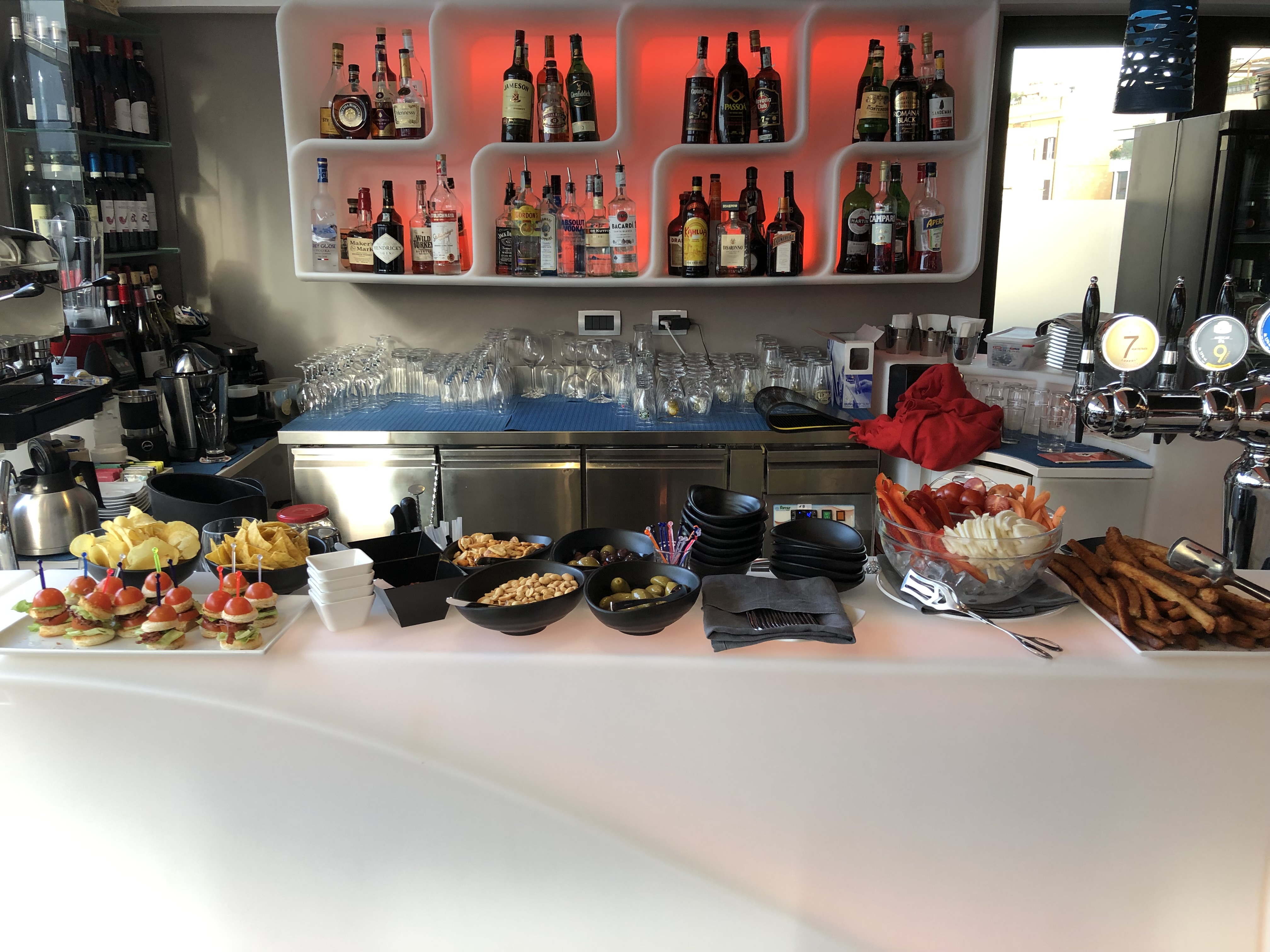
The first time you order baccalà mantecato at a Venetian bacaro, the cicheto that lands in front of you doesn't look like fish. There's a small crostino with a pale, cloud-coloured cream spread on top — maybe a single caper, maybe a strip of roasted red pepper, otherwise unadorned. You take a bite expecting something flaky and salty and you get something that feels closer to mascarpone. Soft, glossy, almost dairy-rich. The cod is in there. You just can't see it any more.
This is the dish Venice has been refining for nearly six hundred years, and it's almost certainly the cicheto that most non-Italians get wrong on first encounter. Outside Italy, "salt cod" tends to evoke something hard and dry — a slab of preserved fish that needs an industrial soak to become edible. The Venetians took the same raw ingredient and decided, sometime in the late 1400s, that the right way to serve it was to whip it into something you could eat with a soup spoon.
The shipwreck
The whole tradition starts with a navigation accident. In 1432, a Venetian merchant captain named Pietro Querini was sailing from Crete to Flanders with a cargo of malvasia wine and spices. A storm caught his ship somewhere off the Portuguese coast, drove it north for weeks, and eventually broke it apart in the Norwegian Sea. Querini and a few survivors washed ashore on the island of Røst, in the Lofoten archipelago, well above the Arctic Circle. They were rescued by local fishermen and stayed for nearly four months waiting for spring.
What Querini saw on Røst was an industry he had never imagined. The Lofoten fishermen caught huge quantities of Atlantic cod in winter, then dried them on outdoor wooden racks in the cold Norwegian wind. The result — stockfish, or stoccafisso — was rock-hard, kept for years, and weighed almost nothing relative to its protein content. He brought samples back to Venice in 1433. Within a generation, Venetian merchants had built a regular trade route between the Veneto and the Lofotens, and dried cod had quietly become a staple of northern Italian cooking.
Salt cod (baccalà, salted rather than air-dried) followed slightly later, through Iberian and Norwegian salt-curing traditions. By the time the Council of Trent in the 1500s formalised the meatless days of the Catholic calendar — Fridays, Lent, vigils of feast days — Venice was importing enough preserved cod to feed those days for an entire republic. Stockfish became the everyday version; mantecato became the celebratory one.
Mantecato vs. everything else
There is no single dish called "baccalà." The cured cod is the raw material; what you do with it varies by region, and the variations are not interchangeable.
- Baccalà mantecato — Venice and the broader Veneto. The fish is poached and then whipped with olive oil into a pale, smooth cream. Served cold or at room temperature, spread on toasted bread. This is what we're making here.
- Baccalà alla vicentina — Vicenza, slightly inland. Same cured cod, but braised slowly in milk with onions, anchovies, parsley and Parmigiano. Served warm, often with polenta. A completely different dish despite the shared ingredient.
- Baccalà in umido — Rome, the south. Stewed with tomato, capers, olives, sometimes raisins. A peasant Lent dish, not a bar food.
- Bacalhau à brás, à gomes de sá, à zé do pipo — the Portuguese versions, also worth knowing about but a different tradition entirely.
Mantecato is the bar-counter version. The others are dinner dishes. If you order baccalà at a Venetian bacaro and the bartender hands you anything other than a small crostino with white cream on top, something has gone wrong.
The soak — the only step that matters
Almost everything about baccalà mantecato is forgiving. You can use slightly more or less oil. You can add a clove of garlic or skip it. You can finish with white pepper, parsley, lemon zest, or nothing. The one thing you cannot fudge is the soak.
Salt cod arrives at the shop dried, stiff, and covered in visible white salt crystals. It's preserved at roughly 20% salinity. To make it edible, you have to rehydrate it and draw out most of that salt over a 36–48 hour period in cold water, changing the water three or four times. Undersoaked cod is inedibly salty. Oversoaked cod loses its flavour and turns mushy. Forty-eight hours, three water changes, in the fridge — that is the rule. Set a reminder. Don't try to do it in a single afternoon.
Buy a thick, white, evenly-cured piece of dry-salted cod from a fishmonger or Italian deli. Avoid the pre-soaked vacuum-packed versions in the supermarket — they're usually undersalted to begin with, and they don't whip well because the protein structure has already been partly broken down. The good stuff costs €25–€35 per kilo and is worth it.
The recipe
Ingredients (serves 6–8 as a cicheto spread)
- 400g dry salt cod (baccalà), thick fillet
- 1 small garlic clove, peeled and lightly crushed
- 1 bay leaf
- 150ml mild extra virgin olive oil (a Ligurian olive oil works better here than a peppery Tuscan one)
- 50–100ml warm whole milk, as needed
- White pepper, freshly ground
- A pinch of salt, only if needed (taste first)
To serve
- Small toasted crostini, sliced from a thin baguette
- Optional finishing: a single caper, a strip of roasted red pepper, a sprig of parsley, or a grind of pepper
Method
1. Soak the cod. Place the salt cod in a deep bowl and cover generously with cold water. Refrigerate for 48 hours, changing the water three times — roughly every twelve hours. By the end, the fish should feel pliable, the salt taste should be mild, and the flesh should have plumped back up to nearly its fresh weight.
2. Poach gently. Drain the soaked cod and place it in a saucepan with the garlic, bay leaf, and just enough cold water to cover. Bring slowly to a bare simmer over medium-low heat. Once the water trembles, lower the heat further. Cook for 15–18 minutes — the fish should flake easily but still hold together. Do not boil. Boiling toughens the protein and ruins the texture.
3. Reserve the poaching liquid. Lift the cod out with a slotted spoon and set aside. Strain a small cup of the cooking water and keep it warm — you may need it to loosen the cream later.
4. Clean the fish carefully. Once the cod is cool enough to handle, remove the skin and every single bone. Run your fingers slowly along each piece. The bones are fine and easy to miss, and one stray bone in a cicheto is enough to ruin the dish. Flake the cleaned fish into a stand mixer fitted with the paddle attachment (or a food processor, if you don't have a mixer).
5. Whip it. Start the mixer on low. With the motor running, drizzle in the olive oil very slowly — exactly as if you were making mayonnaise. The fish will begin to emulsify with the oil, turn paler, and lighten in texture. Keep going until all the oil is incorporated. If the mixture seizes or looks dry, add a tablespoon of the warm poaching liquid (or warm milk) at a time until it loosens into a smooth, glossy cream.
6. Season and taste. Add white pepper. Taste before adding salt — the cod usually has enough, but a tiny pinch sometimes lifts it. The mantecato should be pale, fluffy, spreadable, and faintly sweet from the olive oil.
7. Rest. Cover and refrigerate for at least an hour, ideally two. This lets the flavours settle and the texture firm up slightly. Bring back to cool room temperature before serving — never serve it fridge-cold, or you'll mute the flavour.
8. Build the crostini. Spread a generous knob on each toasted bread slice. Top with a single caper, a small strip of roasted red pepper, or nothing at all. The cream is the point — the garnish is just a colour cue. Eat within an hour.
The mantecato keeps refrigerated for 3–4 days in a sealed container. It actually improves on day two as the flavours marry. Don't freeze it — the emulsion breaks on thaw.
What to drink with it
Baccalà mantecato is rich, salty, and creamy without being heavy. You want a drink that cuts the cream and matches the salt without overpowering the delicate fish flavour underneath. Venice's own drinks happen to be exactly the right answer — which is not a coincidence, because the cicheto and the drink evolved together at the same bacari over the same five centuries.
- Cynar Spritz — the strongest pairing, full stop. Cynar's earthy, vegetal bitterness against the silky cream is excellent, and the artichoke notes echo the umami of the cod. This is what bartenders at the older bacari tend to drink with their own spread when nobody's watching.
- Select Spritz — period-correct. Select predates Aperol by a century and was invented in Venice; it's drier and more herbaceous, which keeps it out of the way of the cream while the bitterness cuts the salt.
- Prosecco straight — the classic bacaro choice. A cold, dry Prosecco Brut. The bubbles cut the richness; the acidity lifts the emulsion. Almost foolproof.
- Soave Classico or Verdicchio — if you want still wine. Mineral, dry whites from the Veneto and the Marche. This is what older Venetian regulars drink when they want something quieter than a Spritz.
What to avoid: anything heavy or tannic. A full Negroni is too strong against the delicacy of the cream. An Aperol Spritz works but the sweetness sits oddly against the salt — workable, not optimal. Any red wine will flatten the dish completely. Cream and tannin together is one of the few genuinely unpleasant combinations in the wine-and-food world.
Where to get the real thing
If you're in Venice, the canonical place to eat baccalà mantecato is Cantina Do Mori in San Polo, which has been open since 1462 and claims, plausibly, to have served some version of this dish to most of the previous twenty generations of Venetians. Cantina Do Spade nearby is nearly as old. All'Arco, also in San Polo, makes a particularly good version. Al Mercà at the Rialto market is excellent in the morning, when the cod has just been prepped.
The thing all four places have in common: you order at the counter, you stand up, you eat the cicheto in three bites, and you wash it down with a small glass of something inexpensive. Twenty minutes from arrival to departure. No menu, no waiter, no candle on the table. This is the model — six hundred years old and still the right one.
The cream
Pietro Querini lived to see his shipwreck become a footnote in maritime history and an obsession in Venetian cooking. He never wrote about baccalà mantecato — the whipping technique came later, sometime in the 1600s or 1700s, after generations of cooks had played with the salted cod and figured out it would emulsify with oil if you treated it like mayonnaise. He just brought back the raw material and let Venice do the rest.
What's striking, six centuries later, is that the dish is still made the same way. A whisk and a wooden spoon instead of a stand mixer, but the same fish, the same oil, the same patience. You pull a Spritz at a bacaro, the bartender hands you a cicheto, and somewhere in that small cloud of white cream on toasted bread is a Norwegian winter, a Venetian merchant, and a five-hundred-year-old trade route that nobody bothered to dismantle.