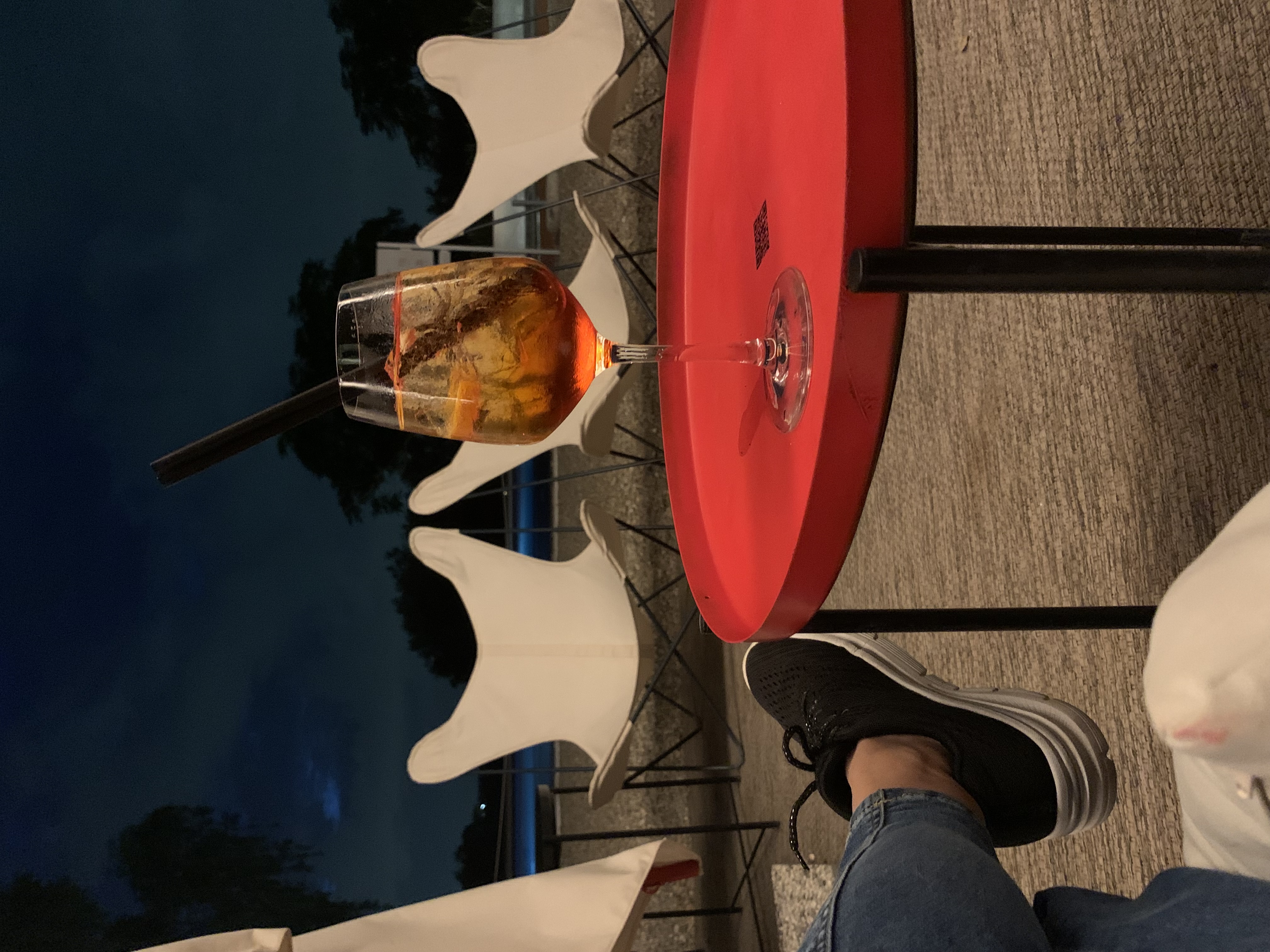
The story goes that in the villages of Lombardy and Piedmont, you could tell how long a man had been sitting at the osteria by how he rode home. One glass, a straight line. Three glasses, and the bicycle started to weave gently across the whole width of the road, the rider upright and dignified and completely unable to hold a course. The drink that produced this unhurried afternoon wobble got named after the vehicle: the bicicletta. The bicycle.
Whether that's literally true or just a good story the north tells about itself, it captures the drink exactly. The Bicicletta is not a party cocktail. It's a low-strength, dry, faintly bitter thing you drink slowly at three in the afternoon while the day goes nowhere in particular — a glass built for lingering, not for getting anywhere.
What it actually is
The Bicicletta is Campari, dry white wine, and a splash of soda, poured over ice in a wine glass. That's the whole thing. It sits in the same family as the Spritz but takes a different route to a similar place: where a Spritz uses Prosecco for its base, the Bicicletta uses still white wine and lets the soda do the fizzing. The result is drier, less sweet, and lighter on the tongue — the bubbles are a whisper rather than a rush.
It predates the Aperol Spritz as an everyday northern drink. Before the Spritz became the global default, the Bicicletta and its close cousin the Americano were what ordinary people in Milan, Turin and the towns between them drank before dinner — cheap, made from a wine bottle already open behind the bar, and gentle enough that a second one wouldn't derail your evening. Or, apparently, your ride home.
The recipe
You'll need
- 60ml Campari (or another red bitter)
- 90ml dry white wine, cold — a crisp, unoaked one: Pinot Grigio, Soave, or any simple dry white
- A splash of cold soda water
- Ice
- An orange or lemon slice to garnish
Method
1. Fill a wine glass or tumbler with ice.
2. Pour in the Campari, then the white wine — roughly one part Campari to one-and-a-half parts wine. Adjust to taste; some like it closer to equal parts, some want more wine and less bitter.
3. Top with a short splash of soda — just enough to lift it, not to drown it. This is a wine drink with a little sparkle, not a fizzy one.
4. Stir once, tuck in a slice of orange or lemon, and serve. Once the ice has done its work it sits around the strength of a glass of wine — no more.
Getting it right
Get two things right and it sings; get them wrong and you've made red water.
The wine has to be properly dry. The Campari brings sweetness and bitterness both; if the wine is also sweet, the whole thing turns cloying. You want a bone-dry, high-acid white to push back against the Campari. A cheap crisp Pinot Grigio is genuinely better here than an expensive oaky Chardonnay, which would fight the bitter and lose.
Go easy on the soda. The most common mistake is treating it like a Spritz and topping it up with fizz until it's pale and thin. The Bicicletta should stay deep coral-red and wine-forward. The soda is a seasoning, a few centilitres, not the main event. If you can't taste the wine, you've added too much.
When to drink it
This is an afternoon drink, and it doesn't really pretend otherwise. It's what you order at two or three o'clock when it's too early for a proper aperitivo and far too early for anything strong, but you'd like something in your hand while you sit in the sun. Its low strength is the entire point — you can have one at lunch, or one while you read, and still do something useful afterwards.
For food, it wants the same things a Spritz wants: something salty and simple. Olives, crisps, a few slices of salami, a wedge of Grana. Nothing that demands attention. The Bicicletta is background music, and it likes its snacks the same way.
The wobble
There's a quiet wisdom in a drink engineered to be weak. The Bicicletta was never trying to get anyone drunk — it was built so a person could spend a whole slow afternoon at a café table, glass after unhurried glass, and still, more or less, find their way home. The bicycle in the name isn't a warning. It's a promise: whatever state you're in by six o'clock, you'll still be able to ride.