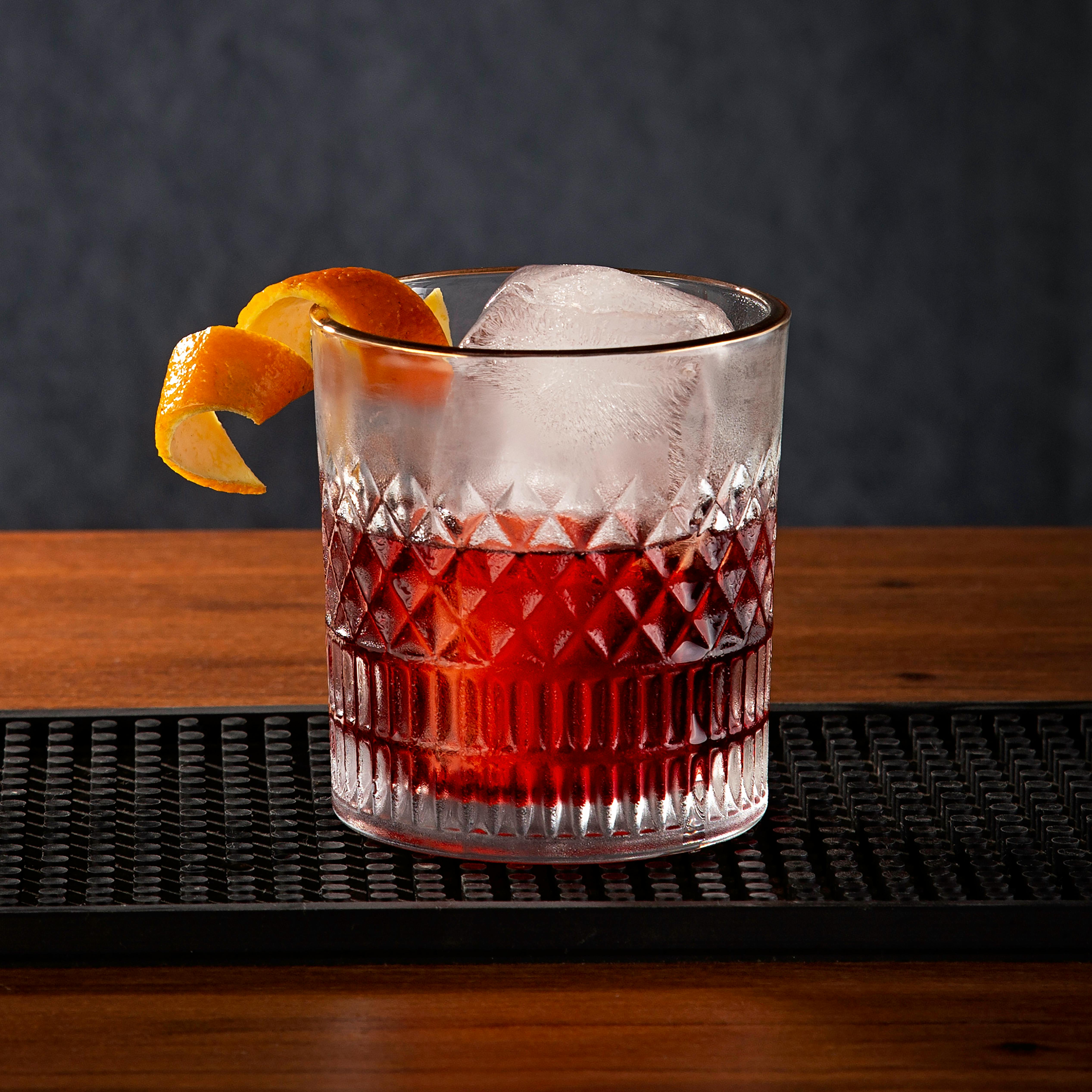
Two ingredients, equal parts, poured over ice and stirred. No shaker, no soda, no third bottle. The Milano-Torino is the plainest drink in the Italian aperitivo canon, and it's also the one everything else descends from. Every Negroni you've ever had is a Milano-Torino with a decision added.
Here's the whole recipe before we get to the history, because it really is this short: equal parts Campari and sweet red vermouth, built over ice in a rocks glass, stirred, orange slice. That's it. If you have those two bottles — and if you've read our spirits cabinet guide, you do — you can make one right now.
The name is the recipe
The drink is named for where its two halves come from. The Campari is the Milano — Gaspare Campari created his bright red bitter in the city in the 1860s. The vermouth is the Torino — sweet red vermouth is the pride of Turin, where Antonio Benedetto Carpano bottled the first modern version in 1786. Put the bitter of Milan and the vermouth of Turin in a glass together and you have a Milano-Torino, mercifully shortened by bartenders to Mi-To.
It was first poured, by most accounts, at Caffè Camparino — Gaspare Campari's own bar under the arcade of the Galleria Vittorio Emanuele II in Milan, which opened in 1867 and still trades on the same spot today. Campari had a bitter to sell and a bar to sell it in, and pairing it with the fashionable Turinese vermouth of the day was good business as much as good taste. The drink caught on because it's genuinely balanced: the vermouth's sweetness and herbal weight round off Campari's sharp bitter-orange edge, and neither one wins.
The family tree
This is why the Milano-Torino matters more than a two-ingredient drink has any right to. It's the trunk, and two of the most famous cocktails in the world are branches.
Sometime around the turn of the 20th century — the usual telling puts it in the Prohibition years — American tourists in Milan started asking for their Mi-To lengthened with a splash of soda water, making it lighter and longer. Bartenders started calling that version the Americano, after the customers who ordered it. Add soda to a Milano-Torino and you've made the Americano.
Then, in Florence in 1919, a Count named Camillo Negroni asked his bartender to strengthen his Americano — to swap the soda water for gin. The bartender did, added an orange garnish to mark the difference, and the Negroni was born. Take the same Milano-Torino, replace nothing and add gin, and you're at the Negroni.
So the whole lineage is one drink learning to branch: Milano-Torino, then Milano-Torino plus soda (Americano), then Americano with gin instead of soda (Negroni). Learn to make the first one and you understand the other two from the inside.
The recipe, properly
You'll need
- 45ml Campari
- 45ml sweet red vermouth (Punt e Mes if you like it more bitter, Cocchi di Torino or Carpano Antica if you like it richer)
- Ice, good and cold
- An orange slice or half-moon to garnish
Method
1. Fill a rocks glass with ice — one large cube is ideal, or a few big ones. Small ice melts too fast and waters the drink down.
2. Pour in the Campari and the vermouth over the ice.
3. Stir gently for a few seconds — just enough to chill and marry the two, not to dilute. This is a stirred drink, never shaken; shaking would aerate it and cloud the colour.
4. Tuck in an orange slice. Serve. It lands around 20% ABV — a proper before-dinner sipper, stronger than a Spritz, gentler than a Negroni.
How to drink it
The Milano-Torino is a slow drink. It's bittersweet, spirit-forward, and not carbonated, which means it's built for sipping across a conversation rather than knocking back. It sits exactly in the middle of the aperitivo intensity scale: more serious than an Aperol Spritz, less punishing than a straight Negroni. If you find the Negroni's gin a little much but a Spritz too light and fizzy, this is your drink — and it always has been, since it got there first.
For food, treat it like a Negroni's calmer sibling: it wants salt and fat. Olives, a few slices of good salami, aged cheese, potato crisps. Nothing sweet, nothing delicate. The bitterness needs something rich to push against.
Two bottles
People chase complicated cocktails — long ingredient lists, obscure amari, three kinds of bitters measured in drops. The Milano-Torino is a quiet argument against all of that. Two bottles most Italian households already own, poured in equal measure over a big piece of ice, and you've got a drink that a Milanese bar has been serving continuously since before Italy finished unifying. Everything fancier came afterward, and most of it started here.