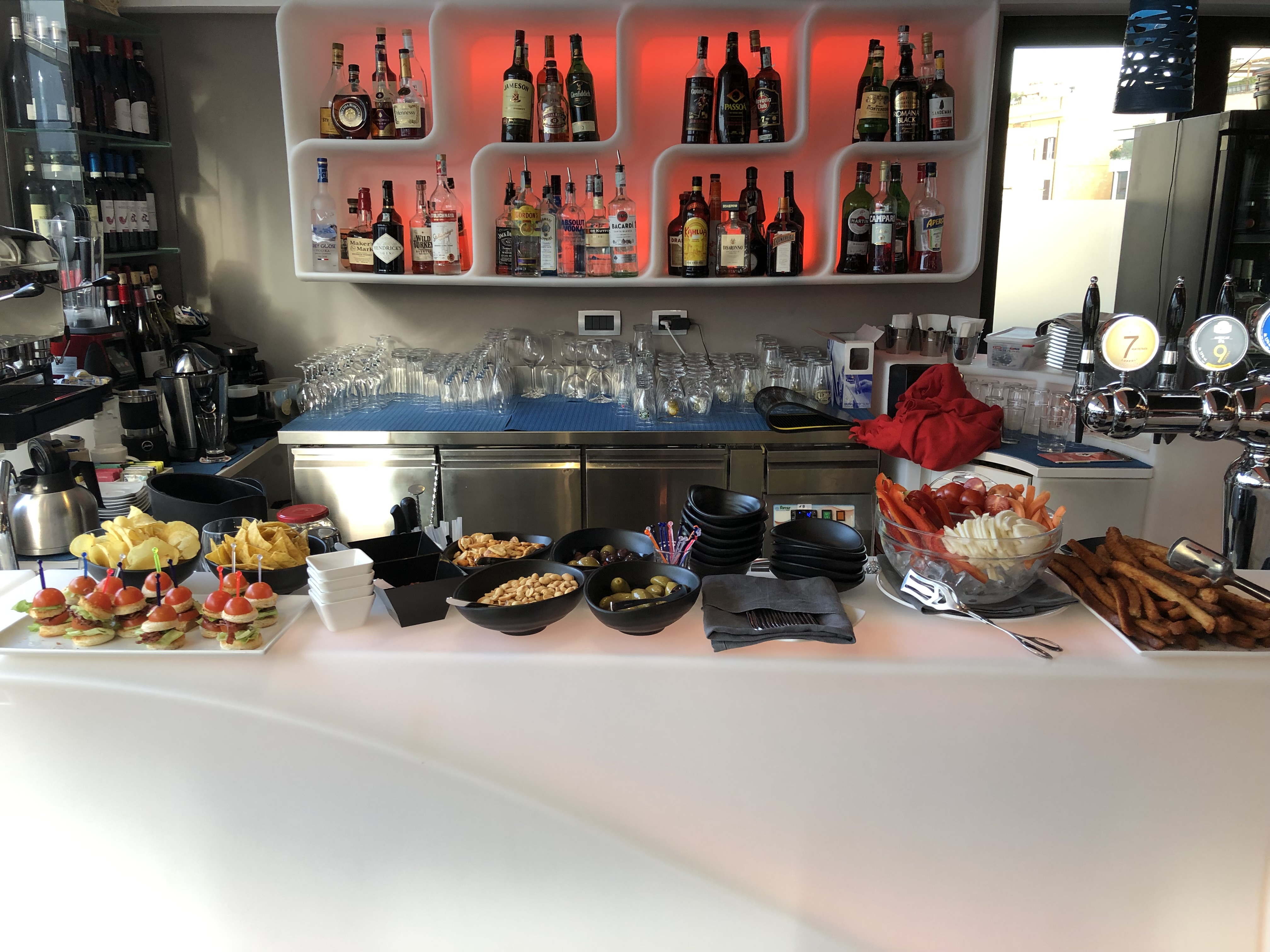
Walk into a bar in Milan at 5:55pm and you will find it nearly empty. Walk into the same bar at 6:05pm and there will be three rows of people at the counter, trays of olives and crostini arriving from the kitchen, and the espresso machine going quiet for the first time since lunch. The aperitivo hour does not creep up on Italian bars. It arrives on the hour, like a shift change.
For visitors, this is one of the more confusing things about Italian drinking culture. The window in which it is socially acceptable to order an Aperol Spritz, a Negroni, or a glass of vermouth on ice with an olive in it is narrower than most people assume, and the rules around what happens inside that window are unwritten but real. Get them right and the bar will start treating you like a regular by your third visit.
The window: 6pm to 8pm, give or take
The standard aperitivo hour across most of northern and central Italy runs from roughly 6pm to 8pm. Many bars formalise this further — it is common for the aperitivo menu and the small free food to appear at 6:30pm sharp and disappear when the kitchen turns over to dinner service around 8:30pm. Before that window, you can order a coffee or a glass of wine, but no one will bring you a tray of stuzzichini and the bar will not feel like an aperitivo bar. After that window, you have crossed into dinner or digestivo territory, and ordering a Spritz starts to look like a tourist move.
Why so narrow? Because the aperitivo exists to fill the gap between the end of the working day and the start of dinner — and Italian dinner is late. Most Italian families don't sit down to eat before 8pm in winter or 8:30pm in summer; in Naples and the south, 9pm is normal. Aperitivo bridges the two or three hours between leaving the office and lifting the first fork. The point of it is transition: end of the working day on one side, start of dinner on the other.
The word itself carries the function. Aperitivo comes from the Latin aperire — to open. The drink is meant to open the stomach for the meal that follows. That's why almost every classic aperitivo is bitter (Campari, Aperol, Cynar, vermouth): bitter compounds stimulate appetite and saliva production, which is the entire point. A heavy, sweet, or boozy drink at 6:30pm closes the appetite instead of opening it, which is why nobody in Italy drinks a Mojito before dinner and why a beer is, at best, a tolerated compromise.
Region by region, the clock shifts
Turin — the original
Turin is where the modern aperitivo was invented. Antonio Benedetto Carpano launched the first commercial vermouth in his Piazza Castello shop in 1786, and the Piedmontese habit of taking a small bittersweet drink before dinner spread outward from there. Turin still treats aperitivo as a vermouth-led affair: a glass of Punt e Mes or Cocchi Vermouth di Torino on ice with an orange peel, served from about 6pm, ending firmly by 8pm. The food is restrained — olives, taralli, maybe a small plate of grissini wrapped in lardo. If you want to do aperitivo where it began, you do it in Turin. We covered the Piedmontese vermouth tradition in our vermouth guide.
Milan — the apericena
Milan invented the modern hybrid that purists complain about and everyone else loves. Starting in the late 1990s, Milanese bars began offering elaborate buffets — pasta salads, focaccia, cured meats, sometimes hot dishes — included in the price of a single drink, typically €10–12. This is the apericena (aperitivo + cena, meaning dinner), and it functions as a cheap dinner for students, finance interns, and anyone trying to eat in central Milan without spending €40. The window is the same 6:30pm to 9pm, but Milanese aperitivo can absolutely replace dinner, and many people use it that way two or three nights a week.
Venice — ombra and bacari
Venice runs on its own schedule. The Venetian habit of pre-dinner drinking is centuries old — long predating Milan's structured aperitivo format — and tied to the city's bacari, small standing-room bars that serve the local snacks called cicchetti. The drink is an ombra, traditionally a small glass of inexpensive wine served from about 5:30pm. Spritzes are common too — Venetian Spritz with Select rather than Aperol if you want the local version. The window starts earlier than in Milan (5:30pm rather than 6:30pm) and ends earlier too, because Venetians eat dinner earlier than Romans or Neapolitans. We have a full cicchetti guide if you want to do this properly.
Rome — looser, longer
Roman aperitivo is more relaxed about timing than the northern version. The window is wider — 6:30pm to 9pm is normal — and the line between aperitivo and dinner is blurrier. In Trastevere and Monti, it is common to start with a Spritz at 7pm, drift into a plate of suppli or pizza al taglio, and end up eating a full meal without ever formally committing to dinner. Romans also drink wine more often during aperitivo than other regions; a glass of Frascati or a small carafe of house red is as ordinary as a Negroni. The food is generous: in Rome, "free with your drink" usually means a small bowl of olives, a few crostini, and a slice of pizza bianca. Our Rome guide covers the city's better aperitivo neighbourhoods in more detail.
Florence — Milanese-leaning, smaller scale
Florence took the Milanese model and shrunk it. Most central Florentine bars run a 6:30pm-to-8:30pm aperitivo with a modest food spread — olives, bruschetta, sometimes a hot dish — included in the price of a drink. Negroni country, obviously, since the drink was invented here in 1919. Order one before 6pm and you'll be served, but you'll be the only Negroni in the room. Our Negroni article covers the Florentine origin story.
Bologna — earlier, longer, more food
Bologna is a food city first and a drinking city second, and it shows in the aperitivo. The window opens around 6pm but stretches to 9pm or later, and the food spread tends to be the most generous in Italy: cured meats, parmigiano, tigelle, sometimes hot pasta. A single drink will routinely come with enough small plates to constitute a small meal, and the social expectation is that you stay for an hour or more rather than swing in for a quick glass.
Naples and the south — later, slower, blurred
South of Rome, the aperitivo as a discrete ritual gets thinner. Naples eats dinner at 9pm or later, which pushes the aperitivo window back to roughly 7:30pm to 9pm and makes it harder to distinguish from the early part of dinner itself. In Puglia and Sicily, aperitivo is more often a glass of wine on a piazza than a structured Spritz-and-stuzzichini affair. The Milanese apericena exists in southern cities too, but it feels imported. The southern way is closer to the original idea: a small drink, a small plate, a long conversation, and dinner shows up when it shows up.
The unwritten rules
One drink, sometimes two
The Italian default is one aperitivo per session. You order, you drink slowly, you eat the food that comes with it, and when the glass is empty you either leave or move to dinner. A second drink is acceptable but unusual. A third puts you in the territory of foreign tourists or finance bros, and the bartender will notice. The point is to open the appetite, not deaden it.
Stand up, drink up, move on
Most Italian aperitivo happens at the bar — standing, or perched on a stool with one elbow on the counter. Sitting at a proper table is fine in Rome and in tourist-facing bars elsewhere, but it's not the default in Milan, Turin, or Venice. Standing keeps the ritual brief and social. You talk to the people next to you. You don't order a third drink because there's nowhere to settle in. And when the glass is empty, you go — either order dinner, or pay and leave. What you do not do is sit nursing an empty glass for forty minutes scrolling your phone. The bar staff will be polite about it, but the seat is meant for someone else.
The food is part of the price, but it isn't a meal
Almost every Italian aperitivo includes some free food alongside the drink: olives, crisps, slices of focaccia, a few small bruschette, sometimes more elaborate plates in Milan and Bologna. This isn't a buffet to be raided. The polite move is to take a small plate, eat it slowly, and not return for thirds. The bar is not losing money on the food; they have priced it into the €8–12 you paid for the drink. But the food is meant to accompany conversation, not replace dinner. (Apericena is the explicit exception, and even there, regulars take one plate, not three.)
Paying happens at the bar, usually at the end
If you ordered at the bar, you generally settle at the bar before you leave. If you sat at a table, the waiter brings the bill. Splitting an itemised bill across a group is rare; the convention of pagare alla romana — dividing the total equally, regardless of what each person had — is far more common, and one person often fronts the whole round and gets paid back later. Tipping is not expected, though rounding up the change is appreciated.
Dress like an adult
This one is regional. In Milan and Turin, aperitivo skews smart: smart-casual at minimum, often work clothes still on from the office. In Rome and the south the dress code loosens, but gym kit, beach clothes, and obvious tourist costume (Birkenstocks with socks, branded backpacks, hiking trousers) will read as out of place anywhere outside the most tourist-saturated piazze. You don't need a jacket. You do need to look like you got dressed on purpose.
What aperitivo isn't
The closest American analogue is happy hour, but the comparison falls apart quickly. A Spritz costs €8 in central Milan at 6:30pm and €8 at 9pm — the drink price never drops. What you're paying for is the food that arrives with the glass, and the small social compression of having two hours in which half the city seems to be doing the same thing you are. The discount, such as it is, is in the company.
The aperitivo and the digestivo are sometimes confused by visitors, which is reasonable — both are bitter, both are Italian, both end up on the same shelf at home. But they sit at opposite ends of the meal. Aperitivo opens the stomach: low-ABV, lightly bitter, designed to make you hungry. Digestivo closes it: stronger, more medicinal, designed to settle what you just ate. Order a Fernet at 6:30pm and you'll get one, but it's the wrong drink for the moment; the same is true of an Aperol Spritz after a heavy 10pm dinner. We covered the digestivo end of the spectrum in our amaro guide and the Fernet-Branca deep dive.
The Milanese apericena is the exception to most of the above. There, aperitivo really can be dinner — an €11 buffet, maybe a second drink, and you walk home full at 9pm. It is worth doing at least once. But understand it substitutes for the ritual rather than running alongside it. If you're going on to a proper restaurant afterwards, treat the aperitivo as the warm-up it was originally meant to be: one drink, one small plate.
7:45pm
None of these rules are policed. You can ignore every one of them and a bartender will still serve you a Spritz at 5:45pm or a Negroni at 10pm — politely, with the change in your hand, and without comment. The ritual lives in what the bar looks like at 7:45pm. Most of the 6:30 crowd has paid and gone. There are empty glasses on tables nobody is sitting at. The bartender is restocking the olives behind the counter for a wave that hasn't started yet. The whole thing is quiet, on a schedule, and over before most of the world has thought about dinner.